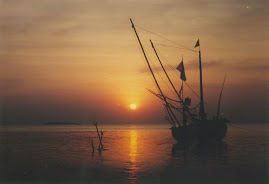
Sekilas tentang kejadian terakhir di kawasan perairan TNKJ tepatnya di zona perlindungan.Gambaran tersebut terkait kejadian penangkapan 2 kapal cantrang milik Jarum dari Tuban dan Sunari dari Jepara.Moga-moga proses penyidikannya bisa cepat diselesaikan dan bisa P21 on schedule. Ucapan terima kasih dan penghargaan setinggi-tingginya disampaikan kepada seluruh pegawai TNKJ baik itu Kasi SPTN I Kemujan, PEH, Honorer maupun Polhut yang ada pada saat itu. Semoga apa yang nampak dan tidak nampak dalam peristiwa ini bisa menjadi pelajaran yang berharga bagi kita semua, baik dalam menangani kasus serupa maupun dalam kerjasama kita sesama pegawai TNKJ. Peace for all.
Kesamaptaan berarti kesiapsiagaan dalam melaksanakan tugas yang kadang tidak mengenal waktu. Untuk itulah polhut harus senantiasa siaga dimana pun berada. Guna menjaga kondisi fisik itu maka diadakan kegiatan kesamaptaan di Brimob Simongan Semarang. Dalam pelaksanaan kegiatan yang diikuti 30 polhut ini banyak kejadian yang menggemaskan. Maklumlah polhutnya sudah separuh baya dan separuh nafas. Ada yang larinya ngos-ngosan, ada yang gemetaran waktu mounteneering dan ada pula yang kambuh darah tinggi serta asam uratnya. Namun yang jelas semua tahu kemampuannya saat ini tidak seperti waktu muda dulu yang bisa 3 kali semalem. Hahahaha….. Hikmah dari kegiatan ini yang utama adalah kebersamaan. Semua yang ikut termasuk Kasat, Wakasat, Kaurdal dan Kanit-kanitnya bekerjasama membentuk tim yang solid. Diharapkan selepas kegiatan ini kebersamaan dan keterbukaan dapat menambaha rasa kepercayaan terhadap sesama, terlebih pada saat menjalankan tugas kelak. Bravo Polhut. Bravo Satgas TNKJ.
Untuk yang kesekian kalinya Pengadilan Negeri Jepara mengadili nelayan kapal cantrang yang menangkap ikan di kawasan Taman Nasional Karimunjawa.Kali ini yang menjadi terdakwa adalah Misron dan Suyono, keduanya warga Jobokuto, Jepara.Mereka terbukti secara sah menangkap ikan di zona pemanfaatan perikanan tradisional, tepatnya di perairan sekitar pulau Cemara Besar.
Oleh jaksa penuntut umum, mereka dituntut hukuman pidana penjara selama 1,5 tahun dengan denda sebesar 1 juta rupiah subsider 6 bulan penjara.Oleh hakim dijatuhkan putusan pidana penjara selama 1 tahun dengan denda 500 ribu rupiah subsider 3 bulan penjara.Namun kedua terdakwa menyatakan piker-pikir terhadap putusan tersebut.Bahkan dimungkinkan akan mengajukan banding dengan alasan mereka tidak tahu peraturan itu serta belum pernah melanggar sebelumnya.
Pelanggaran yang mereka lakukan adalah menangkap ikan dengan jaring cantrang di dalam kawasan perairan Taman Nasional Karimunjawa.Pengoperasian jaring cantrang tersebut menurut Kepmentan no. 392 tahun 1999 tentang jalur tangkap ikan tidak dibenarkan. Hal tersebut menurut UU no.31 tahun 2004 melanggar pasal 8 juncto pasal 84 mengenai alat tangkap yang mengancam kelestarian, pasal 9 juncto pasal 85 tentang alat tangkap yang tidak standar/dilarang.Meskipun ancaman hukuman dalam UU tersebut lebih berat daripada UU no.5 tahun 1990, namun karena pengelolaan Taman Nasional Karimunjawa berada di bawah Departemen Kehutanan, maka UU tentang KSDAHE yang dijadikan dasar.Dalam UU tersebut dijelaskan dalam pasal 33 ayat 3 bahwa setiap orang dilarang melakukan kegiatan yang tidak sesuai dengan fungsi zona pemanfaatan dan zona lain dari taman nasional. Adapun ancaman hukumannya maksimal 1 tahun penjara dengan denda maksimal 50 juta rupiah.
Mengapa cantrang dilarang? Hal itu tidak lain karena pengoperasian jaring tersebut berdampak pada kerusakan habitat ikan, kelestarian ikan dan terumbu karang. Jaring ini dimodifikasi dengan pemberat sehingga dapat mencapai dasar laut.Apapun yang ada di dasar laut akan terangkat oleh jaring ini, tidak terkecuali karang yang menjadi rumah ikan dan tempat ikan bertelur.Menurut sejarahnya, jaring cantrang adalah hasil modifikasi dari jaring pukat harimau (trawl) yang telah dilarang penggunaannya sejak tahun 1980 (Kepres no.30/1980).Perbedaannya adalah pada ukuran jaringnya yang lebih kecil, ditarik oleh mesin khusus (bukan oleh kapal), bentuknya menyerupai jaring payang, dapat dioperasikan dengan kapal berukuran kecil dan hasilnya berupa ikan demersal dan udang. Karena pengoperasiannya yang mirip trawl (trawl semu), maka di beberapa daerah jaring jenis ini sudah dilarang penggunaannya.Bahkan sebenarnya secara teknis jaring cantrang tidak sesuai SK Dirjen Perikanan No. IK.40/DJ.10106/97 tanggal 23 oktober 1997 tentang bentuk dan ukuran jaring berkantong yang boleh digunakan untuk menangkap ikan.
Melihat uraian di atas maka jelaslah bahwa pengoperasian jaring cantrang tidak boleh di Karimunjawa, baik berdasarkan peraturan bidang kehutanan maupun perikanan.Oleh sebab itu setiap SIUP yang dikeluarkan oleh Dinas Kelautan dan Perikanan Provinsi Jawa Tengah untuk kapal dengan bobot diatas 30 GT dan/atau yang memakai alat tangkap jenis pursuseine dan cantrang selalu di tulis adanya larangan menangkap ikan di Kepulauan Karimunjawa.Maka sangat aneh jika kedua terdakwa mengajukan banding atas putusan hakim dalam persidangan di Pengadilan Negeri Jepara.Namun terlepas dari rasa kemanusiaan yang dijadikan latar belakang upaya banding tersebut, putusan hakim sudah sangat tepat demi menjaga kelestarian alam khususnya di kawasan perairan Taman Nasional Karimunjawa.
The education system in Japan is based on the American model and known as a 6-3-3 system, of which only 9 years are compulsory. The characteristics of educational institution in Japan are as follow:
a.Kindergartens
This type of education accepts children between 3 years old until 5 years old. The aim of kindergarten is to develop their minds and bodies by providing them with an appropriate educative environment. The subjects are health, human relation, environment, language and expression.
b.Elementary schools
The elementary school is provided for children between the ages of 6 and 12. Based on MEXT policy, the subjects of study are Japanese language, social studies, arithmetic, science, life environment studies, music, art and handicraft, home making, physic, moral, special activities, and integrated study. The objectives of elementary school are to educate children that have relevant stages of their mental and physical development.
c.Lower secondary schools
All children who have completed the elementary school course are required to go on to lower secondary school for three years. The lower secondary school aims to provide children between the ages of 12 and 15 with general secondary education suited to the level of their mental and physical development, based on the education in the elementary school. Therefore the subjects of both are similar. The differences are the substances of each subject. Some subjects have been developed such as mathematics, fine arts and industrial arts. New subject has been added by English language and home economics.
d.Uppersecondary schools
Upper secondary schools are non-compulsory schools intended to give lower secondary school graduates general and specialized secondary education suited to the level of their mental and physical development. The standard curriculum includes the following required subjects: Japanese language, geography and history, civics, mathematics, science, health and physical, art, English language, home economics, and information.
Figure1. Organization of School System in Japan
Source: Development of Education in Japan, National Report of Japan, 2004.
e.Special schools for disable
The disable children can develop their ability by appropriate education based on special condition according to the type and degree of the individuals’ disabilities in order to support themselves and participate in society. Special schools for the disabled aim to provide children with comparatively serious disabilities with education equivalent to that available in ordinary schools and to provide necessary knowledge and skill so as to make up for the students deficiencies.
f.Higher education
Institutions of higher education in Japan include universities, junior college, and college of technology. Each institution have specialize aims due to develop the abilities as the institutional objectives.
g.Special training schools
This type of school offer systematic educational activities whose aim is to help students develop the abilities required for vocational and daily life, an also to improve their cultural standards. The special training offers education similar to formal education.
Education in Japan is not only national responsibility but also prefecture and municipal responsibility, especially after reform in MEXT. Every prefecture has its own board of education to give guidance, advice, funding for the prefecture’s public and private schools, hiring teachers, choosing textbooks, and drawing the budget.
The Japanese school year begins on April 1 and ends on March 31 in the next year. They use a trimester system that separated by seasonal vacation breaks. Since 2002, MEXT applied five days a week policy for pursuing optional academic or extracurricular activities.
Other type of education that has been developed in Japan is juku. The student who wants to enroll the best high school and university should pass the test. Therefore, they add the time to study outside the school time. They have been guide with professional teacher in private. This type of education is called juku.
2.EDUCATION IN INDONESIA
Indonesia has closely similar type of education system with Japan. Education of Indonesia has been developed based on 6-3-3 system and 9 years are compulsory. After reformation era in 1999, education of Indonesia has been change into decentralization system. Therefore, the local government can take the responsibility to manage the education in their own province or district. The local board of education has responsibility to arrange the budget, hire the teacher, choose the textbooks, renovate the school facilities, and support the education activities.
Under the ministry of national education, all schools apply the entrance test and graduate exam. National test is not only used to screen the student before entrance the public university, but also to screen the student before graduate in the elementary school, secondary school and high school. The materials of national test come from specifics subject, such as mathematics, science, and Indonesian language.The rest materials of studies can be tested by local government with the regional test.
The Indonesian school year starts in August and finishes in July nest year. They use semester system with 2 with holidays between them. The school day is six days a week with additional time for extracurricular activities in the afternoon. Sometimes, some students add their time to study in private lesson. We called “bimbingan belajar” or “les”. To joint with this system, they should pay the cost by their own. Therefore, only some people can participated with this type of study.
The classification of institutional education is closely similar with Japan education system. Indonesia also has kindergartens, elementary school, secondary school, high school, university, special training school, open school and special school for disable.
Figure2. The subjects study in Indonesia school for elementary and secondary level
NO
SUBJECT
ELEMENTARY
SECONDARY
1
Religion
√
√
2
Nationality
√
√
3
Indonesia language
√
√
4
Mathematics
√
√
5
Social
√
√
6
Science
√
√
7
Culture and Art
√
√
8
Physical education
√
√
9
Specialized
-
√
10
Local content
√
√
11
English language
-
√
Source: Law of National Education System in Indonesia, 2003.
The subject studies in Indonesia are the important thing. Therefore, each school tries to find the best curriculum based on government policy. They usually develop the local content with the better subject, such as computer education, English language, Arabic language, China language, and all techniques of mathematics operational (simpoa or jarimatika).
3.RESULT OF COMPARISON
3.1The similarities
a.Japan and Indonesia education system have same basic structure that has been adopted from America style (6-3-3 system).
b.Both countries have 9 years compulsory of education.
c.The budget system, basically from government to support the education activities and facilities.
d.Both have national test to enter the high education.
e.Both have an organization of parents (PTA in Japan and School Committee in Indonesia).
f.Both have education outside the formal school. They are called “Juku” in Japan and “Bimbingan Belajar” in Indonesia.
3.2The differences
a.Japanese school no need to test the student before submit the school, but Indonesia has entrance test.
b.Indonesia education system has graduate exam for each grade in all level of class. The result of exam becomes the key to continue the education in next grade or next level of school. Japanese education system only have exam in high school and high education with own type of test.
c.The standard of education facilities of Japan is better than Indonesia.
d.The subjects of study in Indonesia are more complete and deeper than Japan, because Indonesia has local content that can be developed to increase the student’s ability.
e.The Japan students have highly motivated to study and to reach the top in any activities they choose.That can be happen in Indonesia if the prosperity of society can be increased.